The bankruptcy crisis facing the von Dohren shipping business
Der goldene HandschuhThe bankruptcy crisis facing the von Dohren shipping business is the collision of an ambitious order with a market that has turned against it. The company’s flagship vessel, Susanne, lies idle in a remote bay, earning nothing and costing thousands of dollars each day. Against that immediate financial danger, WH 2 tries to secure a different kind of repair: an official reconciliation for his father, WH 1, after two decades of exclusion from Hamburg society.
The ship and the market collapse
WH 2 ordered Susanne in 1971, at the height of the Oil Tanker Boom. By the time the vessel was finally delivered, prices had fallen sharply. The Oil Crisis had sent the price of a barrel of crude from three dollars to forty almost overnight, and the ship that embodied the pride of Reederei von Dohren became a costly, unproductive asset. Its predicament is rendered in daily terms: no income, thousands of dollars in expenses, and a remote bay in place of useful work.
The wider shipping market had been primed for overexpansion. Japan’s expanding steel industry had taken nearly half of all charter tonnage during the boom, while American tonnage was largely tied up by the Vietnam War; Japanese companies chartered whatever could float. Tramp shipowners committed not only their existing vessels but also unprecedented amounts of new capacity. That tonnage reached the market after Japanese steel managers had already cut their expectations sharply. The crisis facing Susanne therefore belongs to a broader reversal in which vessels ordered for anticipated demand arrived after that demand had weakened.
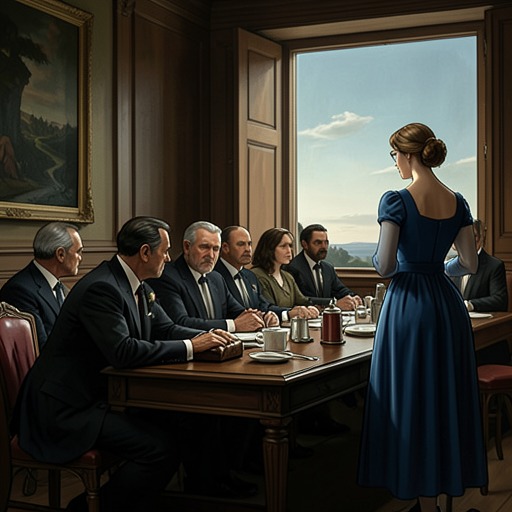
At a dinner with Margot von Dohren, Karl von Lützow hears that Susanne is causing concern. He nods, confident that a solution will be found, but would rather not hear about the problem. He takes Margot’s willingness to mention it as evidence that the situation cannot be too serious: if it were a real emergency, he assumes, she would not trouble him with it. His reassurance thus registers less as a remedy than as a measure of how the crisis is being received within the family.
WH 2’s attempt to restore WH 1
With bankruptcy in view, WH 2 turns toward his father’s standing. He wants WH 1 to receive unanimous, official absolution while there is still time to make amends—a final good act that surprises WH 2 himself. For perhaps the first time, he feels solidarity, almost pity, for a broken man who has already lost much and whose old mistakes continue to be held against him. The crisis in the family business coincides with this effort to address a different inheritance: WH 1’s prolonged exclusion from Hamburg society.
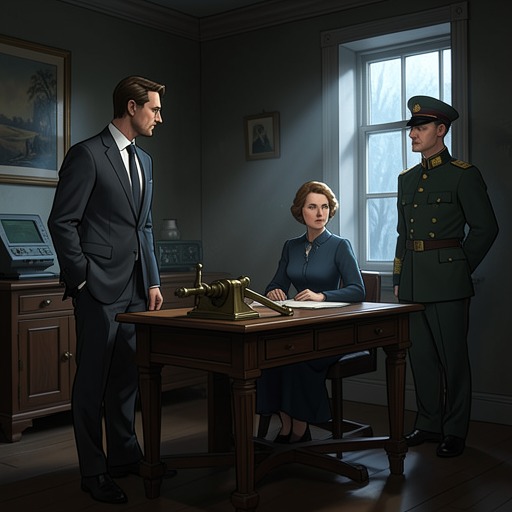
WH 2 spends almost a year cultivating decision-makers, including Peter Marquardt, Ernst von Telkow, Raimer Moritz, and Peter Vossbuhr. The last person he needs to persuade is Leyendieker, a contemporary of WH 1 with whom his father had once been friends, then rivals, before the relationship collapsed into hostility. WH 2 waits while Leyendieker speaks with Bertram Theissen of Hapag Lloyd. When Theissen leaves, Leyendieker agrees that the old grievance should finally be laid to rest. They settle on WH 1’s approaching eightieth birthday as the occasion for the news, with Leyendieker himself to deliver it. The reconciliation is planned; the account does not yet show the birthday announcement taking place.
A business world and an escape
After leaving a gathering at Süllberg through a back entrance, WH 2 takes a taxi to Zum Goldenen Handschuh. The gathering is the world’s largest shipbrokers’ meeting, and it regularly ends in severe drinking. Until then, WH 2 had not known that places like the bar existed. In the following weeks, he returns every few weeks to get drunk, valuing the fact that nobody there knows him.
His first attempts to talk shop there expose the distance between maritime transformation and the bar’s indifferent company. He tells a drinker that a modern container ship contains ten times as much electronics as a passenger aircraft, but his listener understands not a word. On another visit, he explains that loading and unloading a freighter once took a week, whereas a container ship can exchange eight thousand containers in sixteen hours; the response is silence. WH 2 concludes that conversation is pointless and prefers it that way. Set beside the idle Susanne and the looming bankruptcy, these encounters give the shipping crisis a human counterpoint: the industry’s immense technical changes do not translate into recognition or connection in the anonymous bar.